
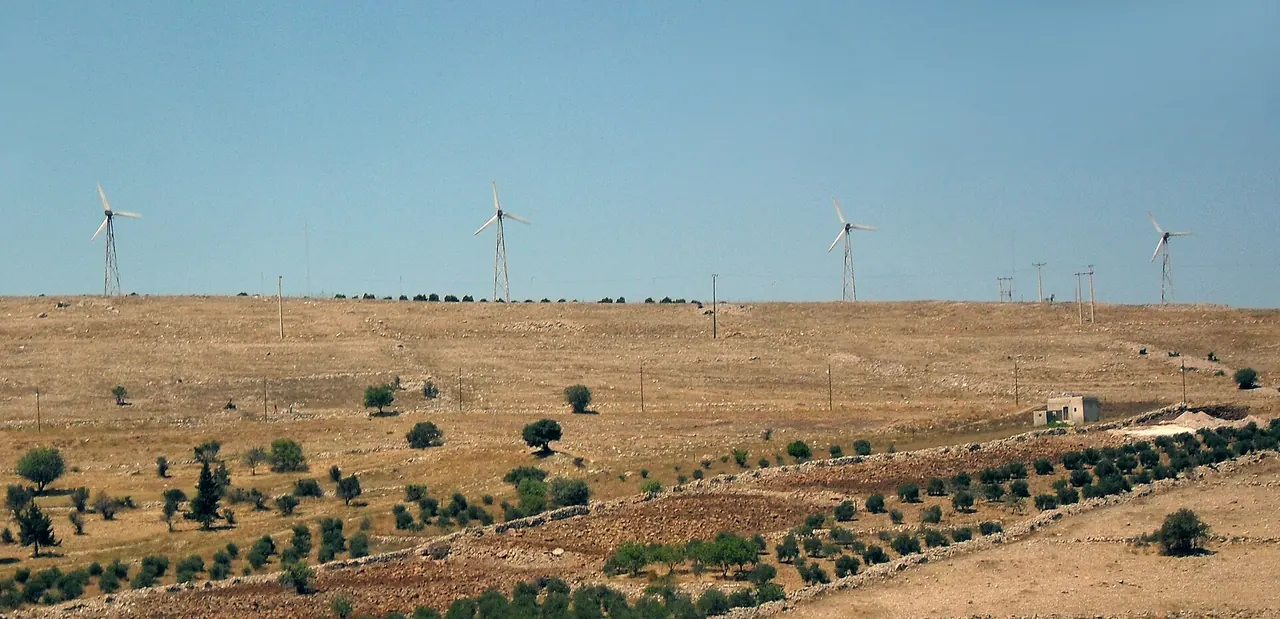

Installed capacity, pipeline and named projects will appear here, each figure linked to its source.
Coverage
Jordan signs EPC contract for 25 MW Batn Al Ghul wind project, fully funded by the UAE
Samra Electric Power Generation Company hired SITE Technology General Contracting for five turbines in Ma'an Governorate, under Jordan's February agreement with Masdar. 1 min read
Five turbines in Ma’an, 25 megawatts, and Abu Dhabi is paying for all of it.
Jordan’s Samra Electric Power Generation Company has signed the EPC contract for the Batn Al Ghul wind project with SITE Technology General Contracting. The scope covers design, supply and installation of five turbines with a combined 25 MW in Ma’an Governorate, funded entirely by the government of the UAE. The contract sits under the cooperation agreement Jordan’s Ministry of Energy and Mineral Resources signed with Masdar in February. Renewables currently supply about 27 percent of Jordan’s electricity, and the 2025 to 2035 energy strategy approved by Cabinet in May targets 40 percent by 2035.
Why it matters
The global wind build-out runs on auctions, PPAs and merchant equity. This one runs on bilateral government funding, with a foreign state as financier and a state-owned Jordanian generator as the contracting party. In our read, that structure barely registers in the capacity statistics, and it is one of the few routes that still moves steel in markets too small or too grid-constrained to attract private developers on price alone.
What it means for MENA
Masdar already holds 50 percent of the 117 MW Tafila wind farm and runs the 200 MW Baynouna solar plant, so Jordan is familiar ground. The number worth watching is not 25. In June, Prime Minister Jaafar Hassan and Masdar CEO Mohamed Jameel Al-Ramahi discussed wind projects totalling 2,000 MW, with technical studies being finalised ahead of implementation. If any meaningful share of that arrives through the same bilateral channel rather than a tender, Jordan becomes the working template for how second-tier MENA wind markets get built.
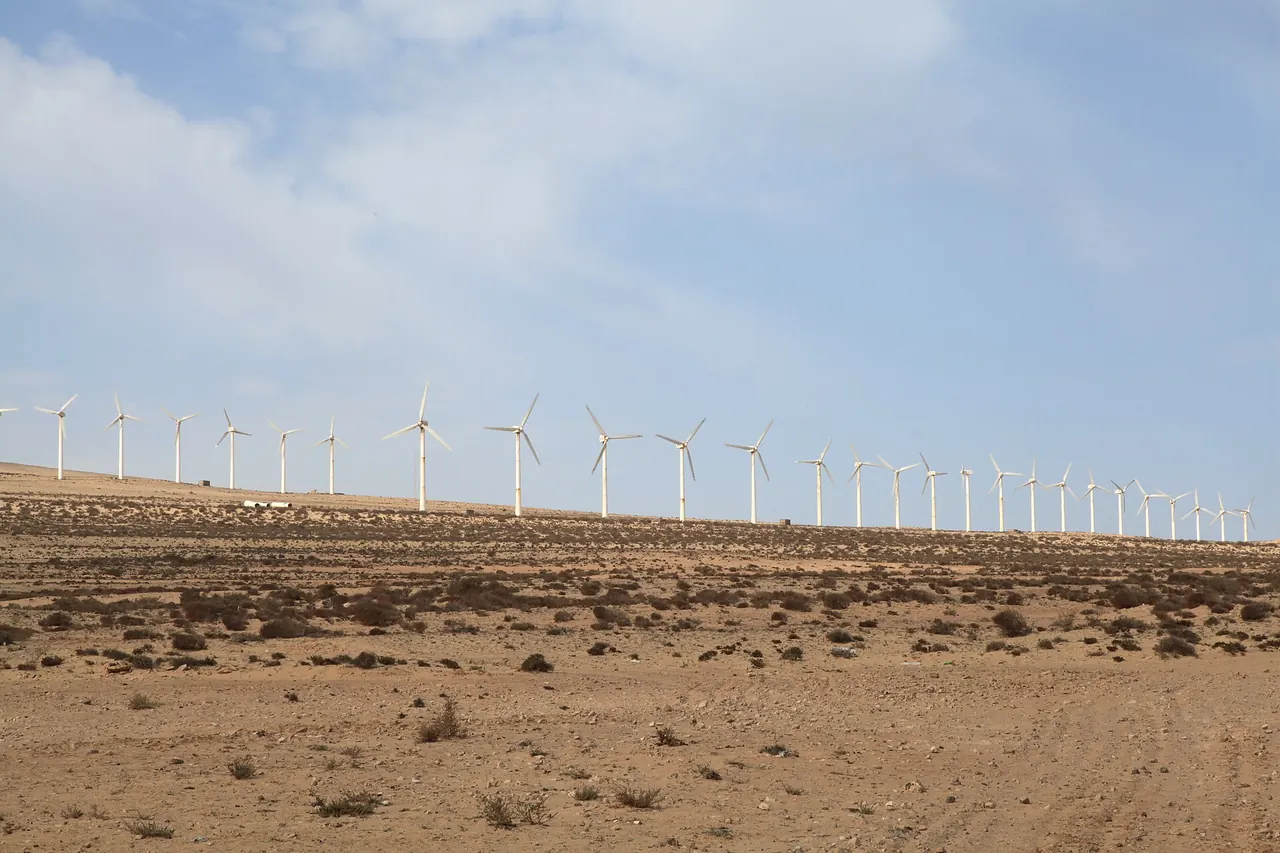
Jordan and Masdar sign an agreement for a fully UAE-funded 25 MW wind farm in Ma'an
Five turbines will go up in Batn Al-Ghul. Masdar handles technical oversight and supervision, while Samra Electric Power Generation Company appoints the EPC contractor and runs operations. 1 min read
Jordan’s wind pipeline grew by 25 megawatts in February, with the UAE picking up the entire bill.
On February 10, Jordan’s Ministry of Energy and Mineral Resources signed a cooperation agreement with Abu Dhabi Future Energy Company, better known as Masdar, to develop a 25 MW wind farm in the Batn Al-Ghul area of Ma’an. Energy Minister Saleh Al-Kharabsheh signed for Jordan and Ali Abdullah Al-Shimmari, Masdar’s Director of Strategic and Special Projects, for Masdar. The project is fully financed by the United Arab Emirates and will see five turbines installed. Masdar takes on technical oversight, implementation supervision, logistics and shipping, and progress reporting, while Samra Electric Power Generation Company will appoint the EPC contractor (selected by Masdar) and operate and maintain the plant, with the option to bring in Masdar for O&M. The Ministry of Energy will secure land and clear regulatory approvals.
What to look for
Watch the EPC selection timeline, since speed of execution is the real test of this kind of bilateral arrangement. Whether this Ma’an project brings follow-on Emirati capital into Jordan’s wind buildout is the question that matters.
What it means for MENA
We read this as intra-Arab capital recycling in action. Twenty-five megawatts is modest in absolute terms, yet the delivery model is what travels here: UAE finance, Emirati developer supervision, and local utility responsibility for operations, without multilateral debt stacking. Our read is that capital is the headline and the UAE’s full delivery model is the real export.
If you work on cross-border energy finance in this region, what does the next phase of UAE outbound clean energy capital look like?